- Login
- |
- (818) 951-7411
- |
- |
- |
- |
- |
Resources for Angelenos Ahead of Wet Weather This Week
Posted on 10/21/2026
LOS ANGELES – Mayor Karen Bass today highlighted citywide preparedness measures and resources for Angelenos ahead of wet weather expected to impact Los Angeles this week, especially in burn scar areas. The National Weather Service (NWS) has forecasted light to moderate rain from a Pacific storm today and tomorrow, likely to bring 1 to 2 inches of rain with the potential for heavier rain in the Santa Monica Mountains and foothills. Those in burn scar areas should be especially vigilant for potential mud and debris flows.
Following the January 2025 wildfires, Mayor Bass issued an Emergency Executive Order marshaling City Public Works crews to install reinforced barriers, shore up hillsides, and clear debris from neighborhoods and burn areas. Much of these mitigation measures remain in place throughout Pacific Palisades, including sandbags and more than 13,000 feet of K-rail. City teams continue to assess hillsides, burn areas, and other high-risk locations for potential flooding, mudslides, and debris flows. Additionally:
-
The Los Angeles Fire Department (LAFD) has augmented specialized resources that can assist with swift water rescues, mud and debris flows, and other rain-related issues with a specific focus in burn scar areas.
-
The Los Angeles Police Department (LAPD) is prepared to assist with any evacuation orders or other emergencies as needed.
-
The Los Angeles Department of Water and Power (LADWP) is ready to respond to any potential power outages and will work around the clock to meet customer demand.
-
Los Angeles Homeless Services Authority (LAHSA) teams have been conducting outreach to inform Angelenos of the weather and to provide them with safety information and supplies, especially those near waterways and areas prone to flooding.
-
Street Services crews are on standby and ready to respond to any impacts to roadways. LADOT and the Bureau of Engineering will continue to monitor known landslide-risk areas that could impact roadway access.
-
LA Sanitation crews are monitoring the City’s wastewater conveyance system to manage incoming water flow. Crews regularly clean and monitor the 18 debris basins in the Palisades area to ensure the capture of mudflow from the burn scar areas and to allow stormwater to flow unobstructed into the storm drain system.
Earlier this month, Mayor Bass was joined by Dr. Ariel Cohen, Chief Meteorologist for the National Weather Service Office in Los Angeles/Oxnard, and leaders from multiple City departments to outline proactive action the City is taking to strengthen infrastructure, protect hillsides, burn scars, and high-risk areas, prepare emergency response teams and equipment, and ensure personnel are ready to respond to keep Angelenos safe ahead of a potentially historic El Niño for Southern California.
“While we don’t know how much wet weather Los Angeles will get this winter, we know what heavy rain and strong winds can do here: streets can flood quickly, trees and power lines can come down, and in the Palisades and other recent burn areas, dangerous mud and debris flows could impact homes. That’s why we are taking action now to keep Angelenos safe,” said Mayor Bass. “At my direction, City crews have been clearing more than 31,000 catch basins and drainage systems, inspecting and reinforcing vulnerable hillsides and burn areas, prepositioning emergency equipment, coordinating tree work near power lines, delivering sand to fire stations, and ensuring Angelenos have the information they need to stay safe. Los Angeles will be ready.”
The City will continue coordinating with County and State partners and the National Weather Service to monitor conditions and plan for potential impacts.
PREPARING FOR A POTENTIALLY HISTORIC EL NIÑO
-
Clearing Debris: City crews have cleared more than 31,000 catch basins and drainage sites and 50 debris basins, including in Pacific Palisades, to maximize drainage and reduce flooding risks.
-
Reinforcing Hillsides: City teams are assessing hillsides, burn areas, and other high-risk locations for potential flooding, mudslides, and debris flows. The City is reinforcing erosion controls, including more than 13,000 feet of K-rail and sandbags, and preparing additional protective measures at 25 locations across the city.
-
Monitoring High-Risk Construction Sites: City teams are monitoring nearly 250 high-risk grading and construction sites, prioritizing the Palisades burn scar and other vulnerable hillside areas, where heavy rain could create additional hazards.
-
Preparing Emergency Equipment: The City is preparing generators, pumps, pumper trucks, sandbags, and other emergency resources for rapid deployment. The Los Angeles Fire Department (LAFD) is preparing personnel and equipment for storm-related emergencies, including flooding and swift-water rescues.
-
Preparing for Power Outages: LADWP is preparing crews and resources to respond to potential power outages and protect essential water and power infrastructure. Emergency responses will be centralized at LADWP’s new Department Emergency Operations Center (DEOC).
-
Outreach to Unhoused Angelenos: The City will coordinate outreach, housing, and potential evacuation efforts for people experiencing homelessness in flood-prone areas.
WHAT ANGELENOS NEED TO KNOW
Residents should take steps now to protect themselves, their families, and their property in the event of severe weather.
Before the Storm
-
Sign up for emergency alerts through NotifyLA.
-
Make an emergency plan with your family and prepare essential supplies, including medications, flashlights, important documents, and pet supplies. Learn more at ready.lacity.gov.
-
Check whether your home is in a flood zone. The Los Angeles County Flood Zone Determination website allows you to see FEMA flood zones in relation to your home, and whether your property is within an LA County Capital Flood floodplain. Flood insurance coverage typically takes 30 days to take effect, so residents who need coverage should take action now.
-
Pick up free sand and sand bags at Fire stations across the city if you live in a burn scar or an area prone to flooding.
-
Clean gutters and yard drains, secure outdoor furniture, and charge mobile devices.
During Severe Weather
-
Follow official instructions, including evacuation or shelter-in-place orders, especially if you live near recent burn areas.
-
Avoid driving on the roads if you can and never drive or walk through a flooded street.
-
Stay away from downed power lines and assume all downed lines are live. Report power outages to LADWP at 1-800-342-5397.
After the Storm
-
Report flooding, mudslides, fallen trees, potholes, and clogged storm drains by calling 3-1-1 or by downloading the MyLA311 app. For sewer and storm drain concerns, contact LA Sanitation at 1-800-773-2489.
-
Check hillsides and walls for visible cracks or movement. Photograph property damage for insurance purposes and consult the appropriate City department before beginning repairs.
Important Resources
-
Life-threatening Emergencies: Call 9-1-1.
-
City of L.A. Emergency Alerts: Sign up at NotifyLA.org
-
City Services and Non-emergency Reports: Call 3-1-1 or use the MyLA311 app.
-
Power Outages: Call LADWP at 1-800-342-5397 or visit LADWP’s outage map.
-
Pet and Large Animal Assistance: Contact LA Animal Services at 1-888-452-7381 or visit here.
Burn Scar Safety
-
Burn scar areas can experience flooding and debris flows with little warning.
-
Debris flows may contain mud, rocks, trees, and other material moving at high speeds.
-
Have an evacuation plan ready before the storm arrives.
-
If you observe rapidly increasing runoff, moving debris, or unusual rumbling sounds, move to safety immediately.
-
Don't wait for conditions to worsen before taking action.
Wind Safety
-
Secure outdoor furniture, decorations, trash cans, and other loose items.
-
Do not park vehicles beneath large trees or near unstable branches.
-
Be alert for falling trees, broken limbs, flying debris, and downed power lines.
-
Stay well away from any downed wires and report them to local authorities.
If Flash Flooding Threatens
-
Move to higher ground immediately.
-
Stay out of flood channels, creeks, washes, and low-lying areas.
-
Never walk or drive through floodwaters.
-
Be especially cautious at night when flooding is harder to see.
-
If officials issue evacuation instructions, leave promptly.
Upcoming Meetings & Events
- Oct21 El Niño and its potential effects within the City of Los Angeles - Zoom Webinar today 6-7PM
- Oct22 Big Tujunga Dam Water Release on Thursday
- Oct24 LAPD Community CleanUp This Saturday 8am-11am
- Oct26 Land Use Committee Meeting
- Oct26 Selection Committee Meeting
- Oct27 Safe Traffic & Transportation Committee Meeting
- Oct28 Whiteman Airport's Future - Final Presentation - In Person @ LA Mission College - Space Limited - RSVP for Ticket
- Oct30 Event: Trunk or Treat on Halloween @ Elks Lodge 10/30 & 31
- Oct31 Tree Watering 10/31/26
- Oct31 Trunk or Treat
- Nov01 Verdugo Hills Cemetery Dine with the Dead! November 1st
- Nov03 VOTE TODAY
- Nov11 VETERANS DAY
- Nov24 Safe Traffic & Transportation Committee Meeting
- Dec19 Wreaths Across America at Verdugo Cemetery of Peace

Join Our Mailing List

Neighborhood Council Calendar
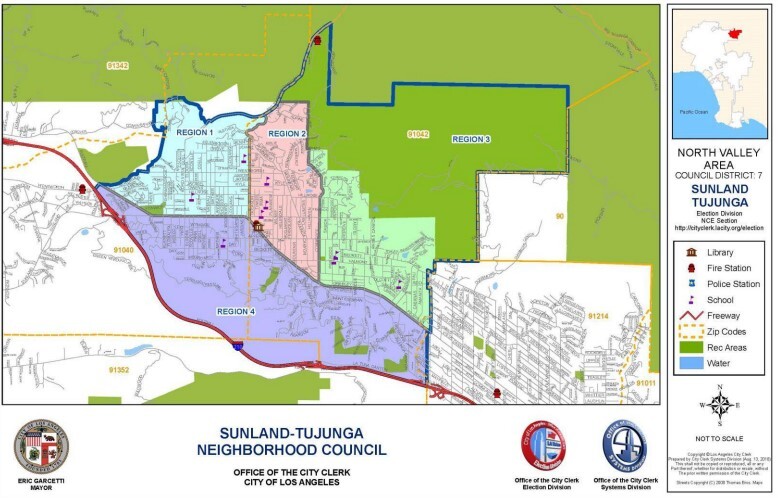
Area Boundaries and Map X