- Login
- |
- (818) 951-7411
- |
- |
- |
- |
- |
Mayor Bass Proposed Budget
Posted on 04/23/2026
City Budget Recap – Key Takeaways from the Neighborhood Council Budget Advocates Town Hall held 4-26-26. Recording for this Town Hall available at https://www.budgetadvocates.org/town-halls
The presentation walked through the City of Los Angeles proposed budget and confirmed what many of us are already feeling on the ground: the City is essentially treading water financially, not fixing underlying problems.
On the revenue side, the City was helped this year by stronger-than-expected income (about $8.6B vs. earlier projections closer to $8.4B), largely driven by property tax stability and other economically sensitive taxes. These core taxes make up roughly 70%+ of total revenue, meaning the budget is heavily tied to economic conditions.
On the expenditure side, the biggest takeaway is that public safety dominates the budget:
- Police: ~$2.1B (~34% of General Fund)
- Fire + Police combined: ~50% of the budget
- Public Works adds another ~15%
That means 60%+ of the budget is locked into core departments, leaving limited flexibility for everything else.
The Big Concern: Structural Deficit
While the City claims the budget is balanced, that’s largely based on optimistic assumptions. Once realistic labor cost increases and ongoing liabilities are factored in, the City is facing ongoing annual deficits (hundreds of millions) and a projected $1B+ cumulative gap over the next few years.
Key drivers:
- Labor contracts (70–80% of costs tied to personnel)
- Rising liability claims (likely underbudgeted)
- Deferred infrastructure maintenance
- Lack of long-term financial planning
Infrastructure & Services – The Real Pain Point
There is a massive backlog:
- Streets/sidewalks: ~$5B deferred maintenance
- Parks: ~$2.6B+ backlog
- Major capital needs (LA River, Civic Center, water compliance, etc.)
Meanwhile, actual service delivery is declining:
- Fewer miles of street paving than last year
- Ongoing sidewalk hazards and liability claims
- Significant number of broken streetlights
Bottom line: core services are not keeping up, and residents are noticing.
New Taxes & Fees Coming
To close gaps, the City is looking at multiple revenue increases:
- Streetlight assessment (potentially doubling)
- Hotel tax increases (Olympics-related)
- Cannabis business tax expansion
- Proposed November taxes (delivery, rideshare, ticket tax, vacancy tax)
At the same time, utilities and services (water, sewer, trash) are expected to increase significantly, putting more pressure on residents.
Neighborhood Council Impact
- Funding remains at $25,000 per NC (no increase)
- Rollover rules remain uncertain beyond $10,000 default
What’s Missing
Several major issues lack clear funding or planning:
- Homelessness spending transparency
- Olympic costs
- Climate initiatives (no funding plan attached)
- Emergency reserves (City below recommended levels)
Bottom Line
This is a status quo budget:
- No major cuts this year (better than last year)
- But no structural fixes either
- Relies on future taxes and optimistic assumptions
The City isn’t solving the problem—it’s managing it year to year.
Integrated Q&A / Discussion Themes
Here are the main themes raised during Q&A and discussion
1. Streetlight Crisis
- Assessment may double to fund repairs
- ~200,000 lights reportedly not working
- Property owners vote (weighted by parcel size)
- If it fails → repairs likely delayed or reduced
2. “Follow the Money” Issues
- Many fees (parking, permits, fines) go into the General Fund, not dedicated uses
- Concerns about transfers from special funds into the General Fund
3. Cannabis Tax Debate
- Strong pushback: taxing illegal businesses while legal ones struggle
- $430M reportedly uncollected from legal operators
- Raises serious enforcement and fairness concerns
4. Sidewalks & Liability
- City may be choosing to pay claims instead of fixing infrastructure
- Settlement requirements exist, but funding is inconsistent
- Residents still dealing with unsafe conditions
5. Budget Transparency & Trust
- Labor negotiations happen largely behind closed doors
- Calls for:
- Open negotiations
- Independent financial oversight
- Realistic forecasting
6. Quality of Life Decline
Repeated theme:
- Broken streets, sidewalks, lights
- Reduced services
- Perception that the City is not prioritizing basics
“This budget may avoid immediate cuts, but it does not fix the long-term problems. Without structural changes, we’ll continue to see rising costs, declining services, and growing frustration from residents across Los Angeles.”
WHAT'S NEXT?
City Budget Committee Meetings.
City Council Budget Meetings.
Approve City Budget by May 20, 2026.
Council File is 26-0600 -- https://cityclerk.lacity.org/lacityclerkconnect/index.cfm?fa=ccfi.viewrecord&cfnumber=26-0600
Upcoming Meetings & Events
-
Aug25 Cancelled
Safe Traffic & Transportation Committee Meeting - Aug30 Tree Watering Day 8/30 -- Starts at 7:00AM
- Aug31 Community Survey
- Sep14 STNC Board Selections Planning Meeting
- Sep22 Safe Traffic & Transportation Committee Meeting
- Oct23 Movie Night at Verdugo Pool
- Oct27 Safe Traffic & Transportation Committee Meeting

Join Our Mailing List

Neighborhood Council Calendar
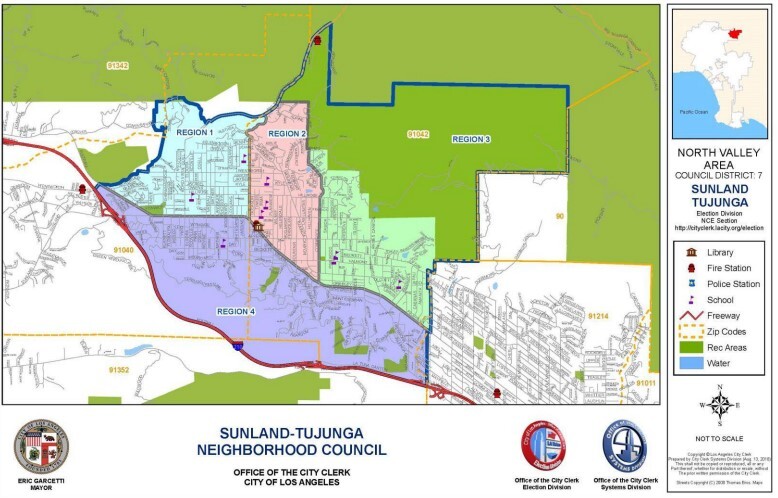
Area Boundaries and Map X